STEM Field Trip Helps Students Reach for the Moon

By Kim Niebauer
Loretto Elementary School, Teacher of Gifted
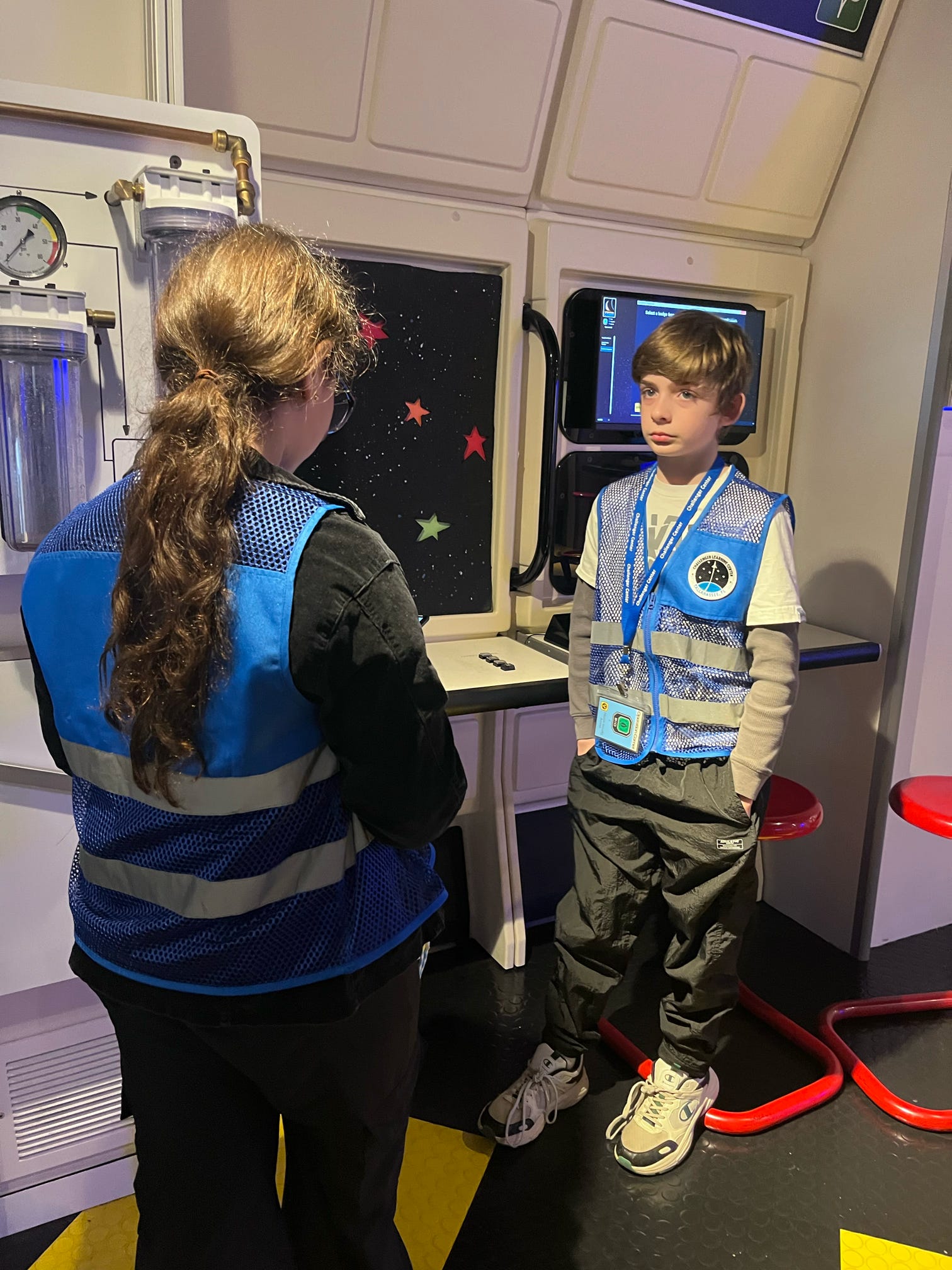
With the Artemis II mission renewing global interest in human exploration beyond Earth’s orbit, space feels closer than ever. This year, my 4th and 5th-grade students did not just read about science and space travel. Instead, they experienced it firsthand during a field trip to the Challenger Learning Center in Tallahassee, Florida.
This field trip was funded through a Jacksonville Public Education Fund grant connected to my selection as a Duval County Public Schools Teacher of the Year finalist, along with a grant from the Florida Association for the Gifted. Together, these funds provided access to an immersive learning experience that would not have been possible otherwise.
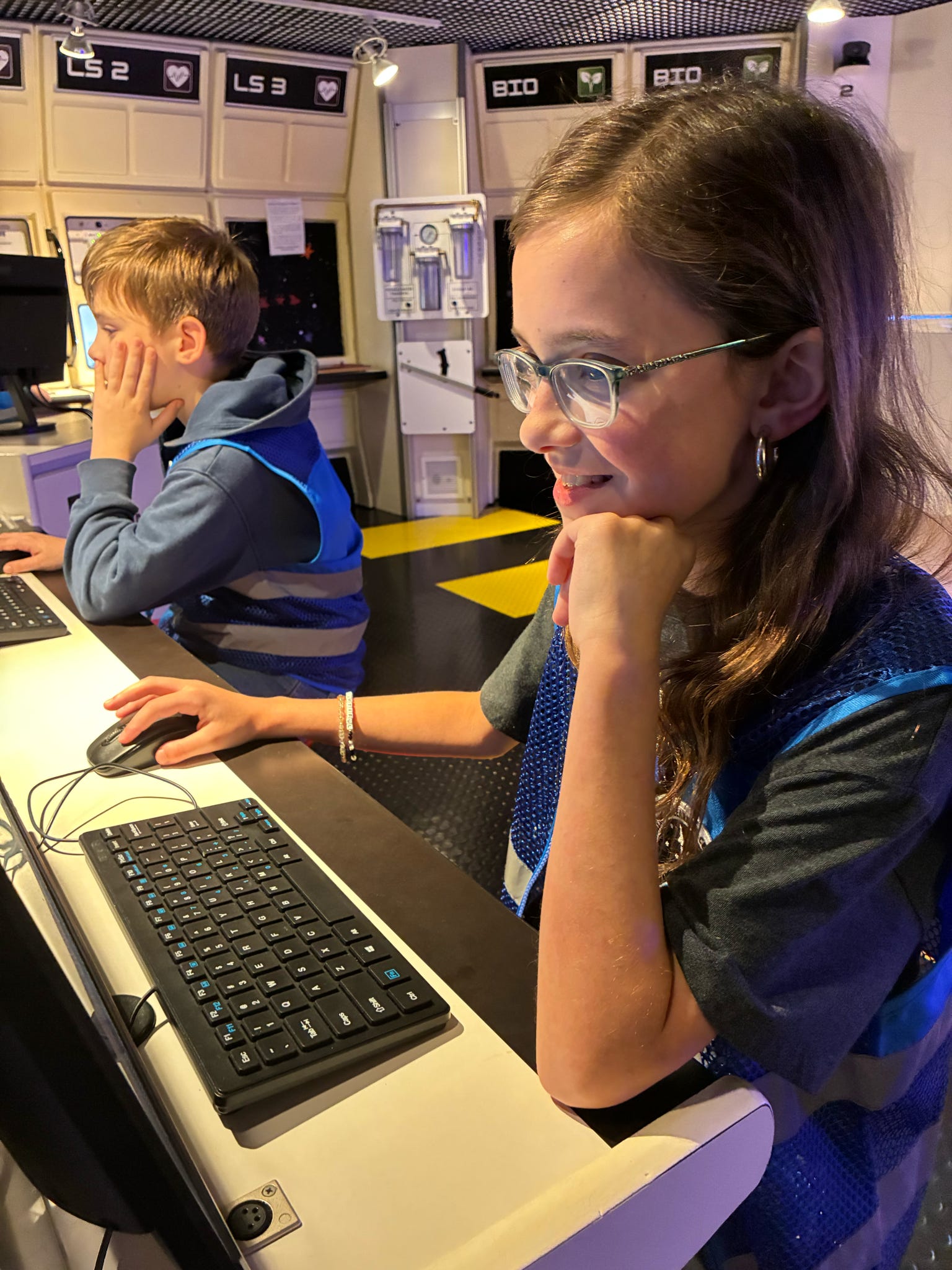
The CLC immerses students in authentic STEM experiences, emphasizing collaboration, critical thinking, and real-world problem solving. Through simulation-based learning, live demonstrations, and immersive visualization, students were challenged to think and work like scientists and engineers, applying grade-level concepts in scenarios that mirror real scientific work.
Collaboration was central to the space mission simulation. Students worked in interdependent Mission Control and Space Station teams, rotating roles to experience both perspectives. After multiple failed attempts, teams reflected, adjusted, and ultimately succeeded in completing a mission focused on studying long-period comets and their potential impact on Earth.
Students also engaged in science demonstrations and immersive visualization. Concepts such as energy, force, matter, and scale came to life during the Dynamic Demo and the planetarium program Mysteries of the Unseen World. In the IMAX 3D film Wild Rescue, students saw how science and medical innovation support wildlife conservation.
As the Artemis II mission concludes after a successful journey around the Moon, the timing of this field trip feels especially meaningful. While astronauts traveled farther than any humans in history, my students were discovering that exploration, innovation, and discovery are not distant ideas. They are real, relevant, and within reach. Watching my students make connections, ask better questions, and see themselves as capable scientists reminded me why experiences like this matter and why investing in teachers and students truly changes what is possible.
As we celebrate the achievements of the Artemis II astronauts, it is worth remembering where journeys like theirs often begin. The astronauts of Artemis II, like millions of scientists, engineers, educators, and innovators across the country, come from publicly funded education systems.
Public schools are where curiosity is nurtured, and potential is recognized, giving students the tools to imagine lives beyond what they can see. Experiences like this field trip exist at the intersection of inspiration and opportunity, and they depend on sustained investment in public schools. Supporting public education is not optional; it is essential.